Coving and cornice in Teesside
Coving starts at around £150 a room in Teesside for a plain profile fitted and jointed, with deeper plaster cornice and ornate Victorian profiles priced by the metre. Mitres cut tight, joints filled and sanded, ready for the decorator.
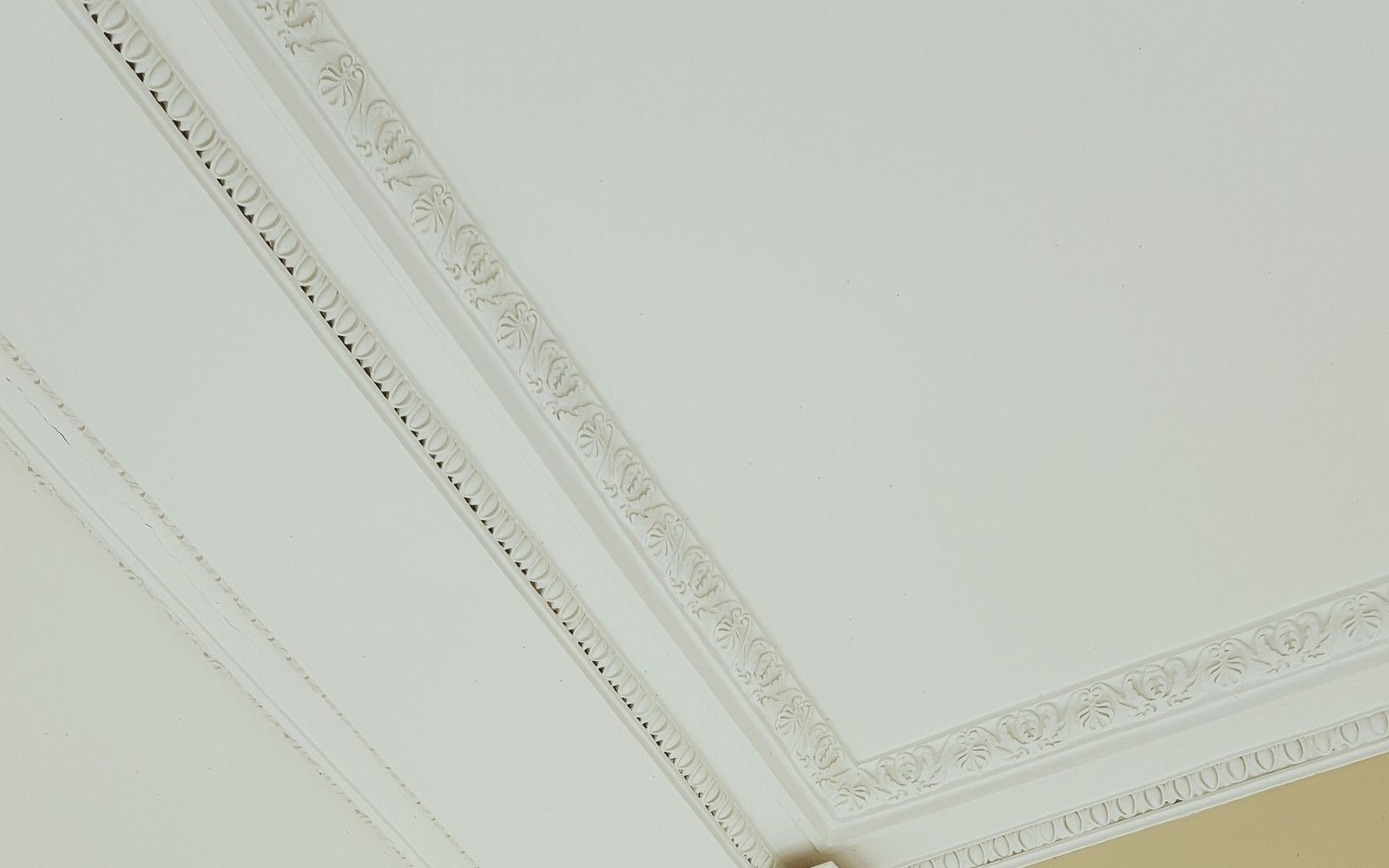
The line between wall and ceiling
Coving does two jobs. It hides the crack that opens where two different surfaces meet and move at different rates, and it gives a room a finished edge instead of a raw corner. On a modern estate house a plain 100mm gypsum profile is usually right and costs very little for the difference it makes. In the high-ceilinged Victorian rooms of the Hartlepool Headland, central Middlesbrough and the Saltburn jewel streets, the original run was a deep plaster cornice, often with dentils or an egg and dart pattern, and replacing it with a shallow modern cove flattens the whole room.
What you can choose
- Plain gypsum coving: 100mm or 127mm, the standard choice, quick to fit and easy to paint.
- Plaster cornice: heavier, deeper and crisper, cast in fibrous plaster and fixed with adhesive and screws, the right weight for a period room.
- Ornate and reproduction profiles: matched to what is already in the hallway or the front room so an extension or a repaired run does not announce itself.
- Ceiling roses and corbels: fitted alongside the run, usually at the same visit.
- Restoration: clogged detail carefully opened up, missing sections re-cast and pieced in on the older stock.
What moves the price
Linear metres first, then the profile. A square bedroom is a fast run of four straight lengths and four internal mitres. A lounge with a chimney breast, a bay window and a squared bulkhead has a dozen mitres, and mitres are where the time goes and where a poor job is instantly visible. Ceiling height and access add labour, ornate profiles cost several times plain per metre, and matching an existing period run means either sourcing a close profile or taking a mould, which is skilled work priced accordingly.
Fitting it so the joints never show
The surfaces get scratched and sealed so the adhesive grabs, lengths are cut long and eased in, and internal angles are cut rather than relied on from a mitre box alone. Joints are filled, left proud, then sanded back flush once dry, so nothing telegraphs through the paint. If a room is being skimmed, the coving normally goes up after the skim has dried, which is worth planning into the order of works.